Bitcoin DCA Into Custody: Where Your Recurring Buys Actually Sit

A recurring bitcoin buy decides two things: how much bitcoin you accumulate, and where that bitcoin sits while you do. On most apps and exchanges it accumulates in a balance the platform holds on your behalf. On Onramp, recurring buys in a Finance account settle into cold storage at BitGo, a qualified custodian, and recurring buys in a Core account settle directly into a Multi-Institution Custody vault. After the first, recurring buys carry no Onramp trading fee.
Dollar-cost averaging is one of the simplest ways to build a bitcoin position. You buy a fixed amount on a fixed schedule and stop trying to time the price. If you are new to the strategy, the guide to bitcoin DCA covers how it works and why long-term holders use it.
What gets far less attention is the question that arrives about a year later. Someone buying $500 a week has put $26,000 into bitcoin by the end of the first year. At some point the position becomes large enough that where it sits matters more than the fee on any single purchase. Most people only think about this after something forces the question, whether that is an exchange outage, a security incident in the news, or a hardware wallet they trusted turning out to have a vulnerability. The question is much easier to answer before you start buying than after the position has grown.
The Three Places a DCA Stack Can Sit
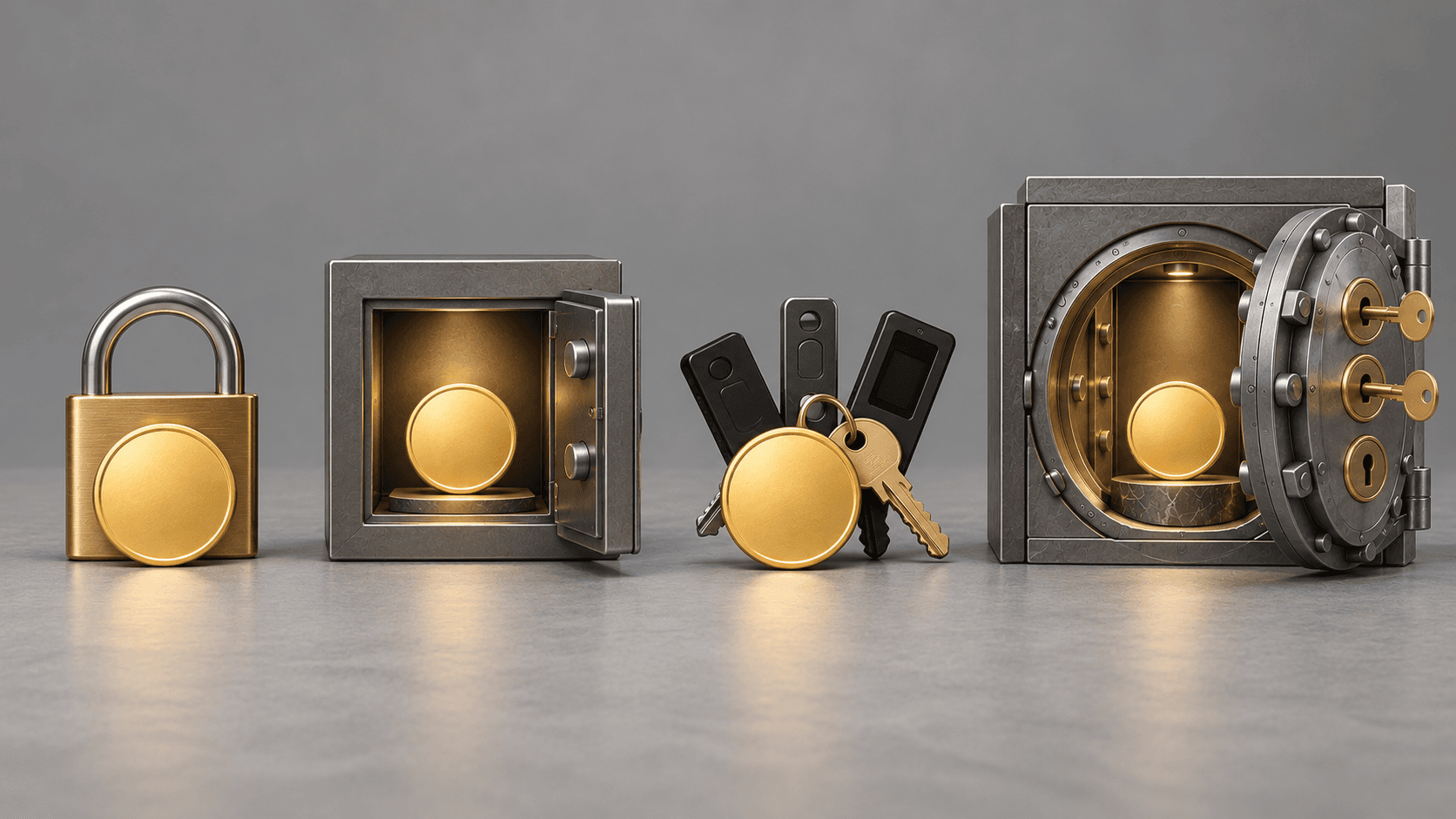
Every recurring buy ends up in one of three places. Each is a legitimate choice for someone, and each comes with different tradeoffs.
1. A balance the platform holds
This is the default on most exchanges and buying apps. The platform holds the bitcoin on your behalf, usually pooled with other customers' bitcoin, and you hold a claim on it.
Cost: usually nothing beyond the trading fee on each purchase.
What you get: the simplest possible experience. There is nothing to set up and nothing to manage.
What you take on: the platform itself. If it is hacked, freezes withdrawals, or fails, your bitcoin is exposed to whatever happens next, and in a bankruptcy customers of a failed custodian have historically waited years for partial recovery.
Fits: small amounts, short holding periods, and people still learning.
Does not fit: a position you are building for the long term, which is what most people who set up a recurring buy are doing.
2. Your own wallet, by withdrawal
Some platforms let you withdraw each purchase, or each time the balance crosses a threshold, to a wallet you control.
Cost: a hardware wallet, plus any withdrawal fees.
What you get: real self-custody. No company can freeze, lose, or be compelled to hand over your bitcoin.
What you take on: everything that comes with holding keys. Seed phrase backups protected against fire, theft, and loss, firmware updates, and a recovery plan your family could actually follow if something happened to you. It also means the bitcoin sits on the platform between withdrawals.
Fits: technically confident holders who want no counterparty and have a realistic inheritance plan. That is a respectable choice, and for some people it is the right one.
Does not fit: anyone who would rather not be responsible for key management for the next thirty years, or whose family could not recover the bitcoin without them.
3. Custody you chose, where the buy settles
The third option is to have each purchase settle directly into custody you selected, rather than into an exchange balance waiting to be moved.
Cost: depends on the custody model.
What you get: no exchange balance building up, no withdrawal step, and no device to manage.
What you take on: trust in the custody arrangement you picked, which is why the arrangement matters.
Fits: long-term holders who want neither an exchange balance nor the work of self-custody.
How Onramp Settles Recurring Buys
Onramp is built around the third option, and it offers two versions of it.
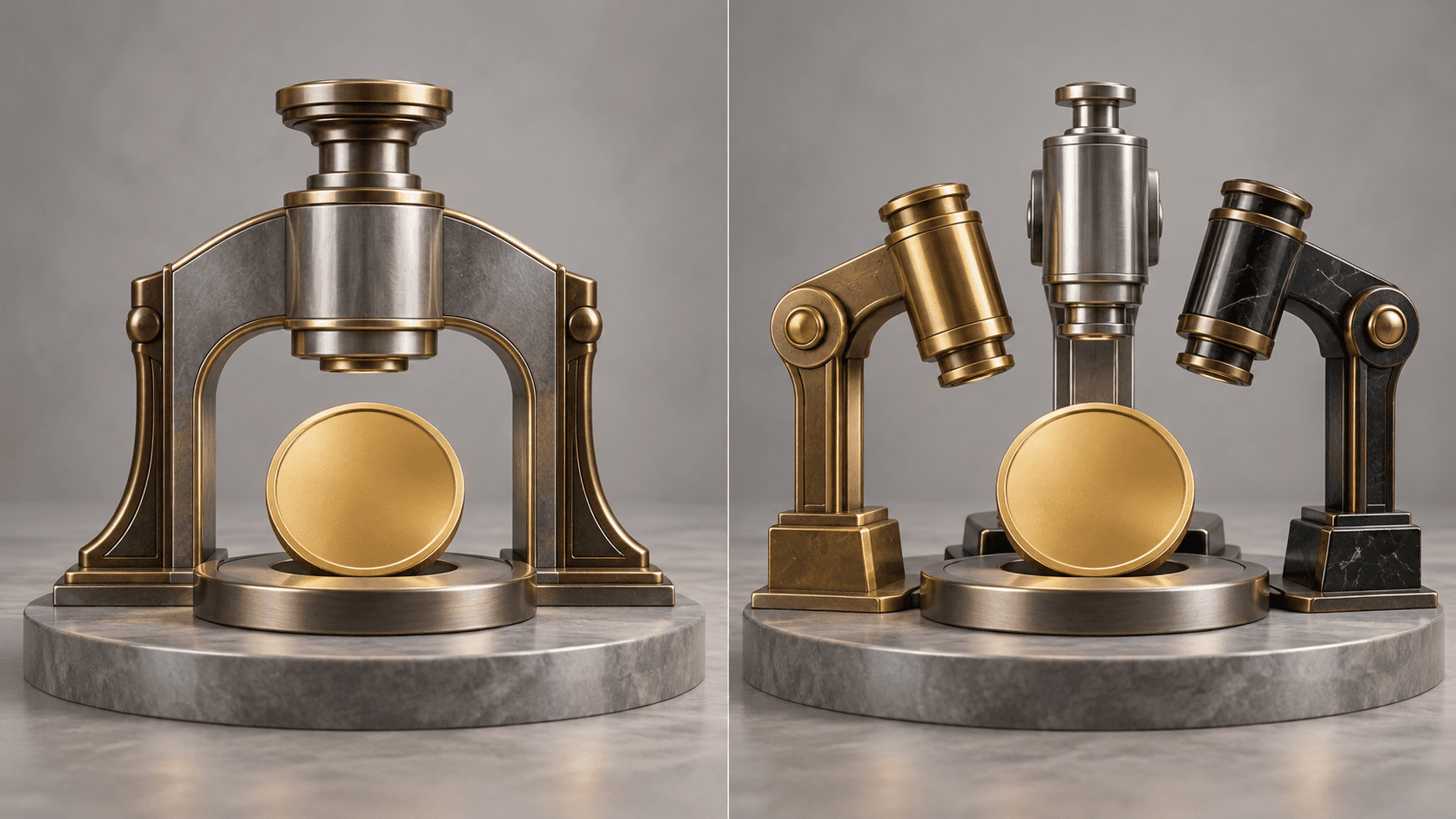
Onramp Finance. A Finance account is free to open, with no minimums. Recurring buys settle directly into cold storage, held at BitGo, a qualified custodian. There is no exchange balance accumulating and no withdrawal to a hardware wallet. The bitcoin is held by a single custodian, which is the honest limit of this tier, and it is a meaningful step up from leaving a stack on an exchange.
Onramp Core. Core is where Multi-Institution Custody becomes available, and recurring buys in a Core account settle directly into your vault. Three institutions protect your bitcoin: Onramp (US), BitGo (US), and CoinCover (UK). No one of them can lose it, move it, or use it, and nothing moves without your permission. It takes two of three institutions to move your bitcoin, and there are no hardware wallets, seed phrases, backups, or PINs for you to manage. The vault is titled in your own name and verifiable on-chain. Secured by three. Controlled by you.
Many holders start with Finance and move to Core once the position is large enough that one custodian holding it no longer feels like enough. Because both tiers run on the same platform, moving from one to the other is a conversation with the Onramp team rather than a migration.
What It Costs
Recurring buys carry no Onramp trading fee after the first; the first recurring buy is charged the standard trading fee. This is a permanent feature of the platform, not a promotion. One-time buys carry a trading fee of 0.85% on Finance, 0.65% on Core, and 0.32% on Private. A Finance account is free. Core starts at $250 a month or $2,400 a year and includes one IRA account.
When to Think About Where Your Stack Sits
The right moment has less to do with a specific dollar amount than with what losing the bitcoin would mean to you. A few signs that it is time:
- The balance has grown past what you would be comfortable leaving on a single platform.
- You have been meaning to move it into your own wallet and have not, because of the setup and the ongoing upkeep.
- Someone in your family would need to reach the bitcoin if you could not.
Frequently Asked Questions
Does Onramp charge a fee on recurring buys?
No Onramp trading fee applies to recurring buys after the first. The first recurring buy is charged the standard trading fee. It is a permanent feature, not a promotion.
Where does bitcoin from a recurring buy go on Onramp?
In a Finance account, it settles into cold storage held at BitGo, a qualified custodian. In a Core account, it settles directly into your Multi-Institution Custody vault.
Do I need a hardware wallet to dollar-cost average with Onramp?
No. On both tiers, purchases settle directly into custody, so there is nothing to withdraw and no device to manage.
What is the difference between Finance and Core for a DCA plan?
Finance holds your bitcoin with one qualified custodian. Core holds it in a vault secured by three independent institutions, where no single institution can move, lose, or use it.
Can I move from Finance to Core later?
Yes. Both run on the same platform, so upgrading is a conversation rather than a migration.